Operating Intelligence
Organisational Brain: Why Businesses Need One in 2026
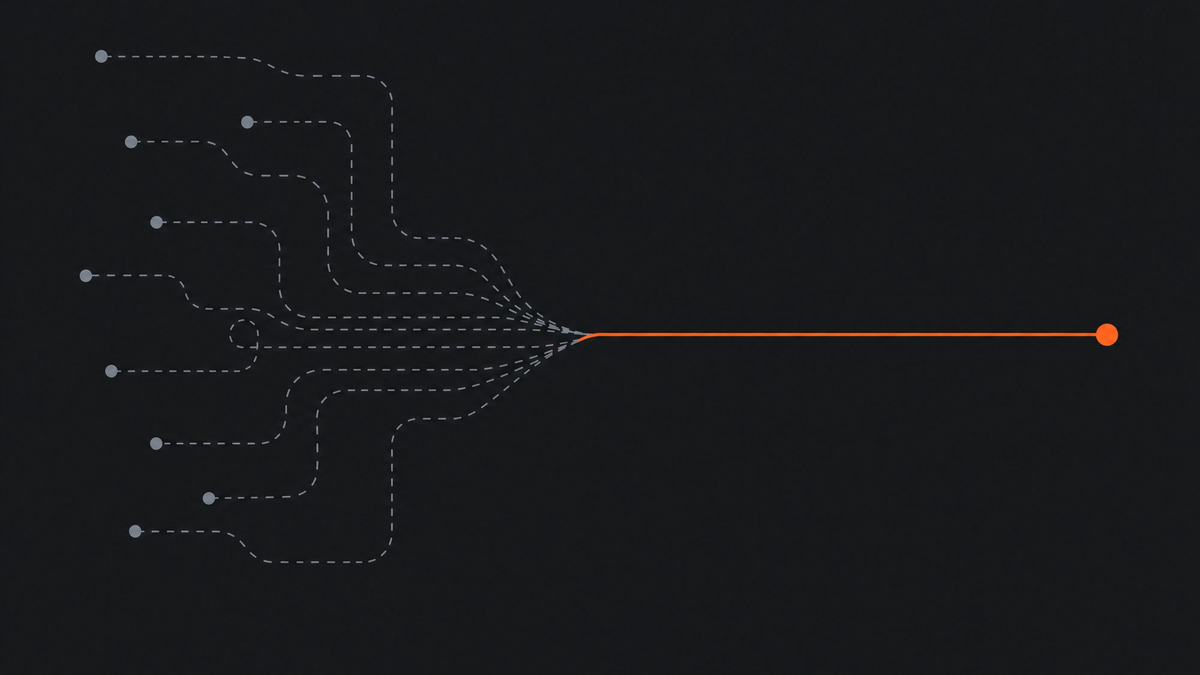
Most teams do not lose momentum because people stop caring. They lose it because the business cannot remember clearly enough to act. Decisions sit in meeting notes, client history hides in inboxes, and AI tools are asked to help without the context that makes help useful.
An organisational brain is the shared memory layer of a business: the system that captures what happened, connects it to what matters, and gives people the context to make better decisions. In 2026, it is the difference between AI as a set of clever tools and AI as a system the business can rely on.
What is an organisational brain?
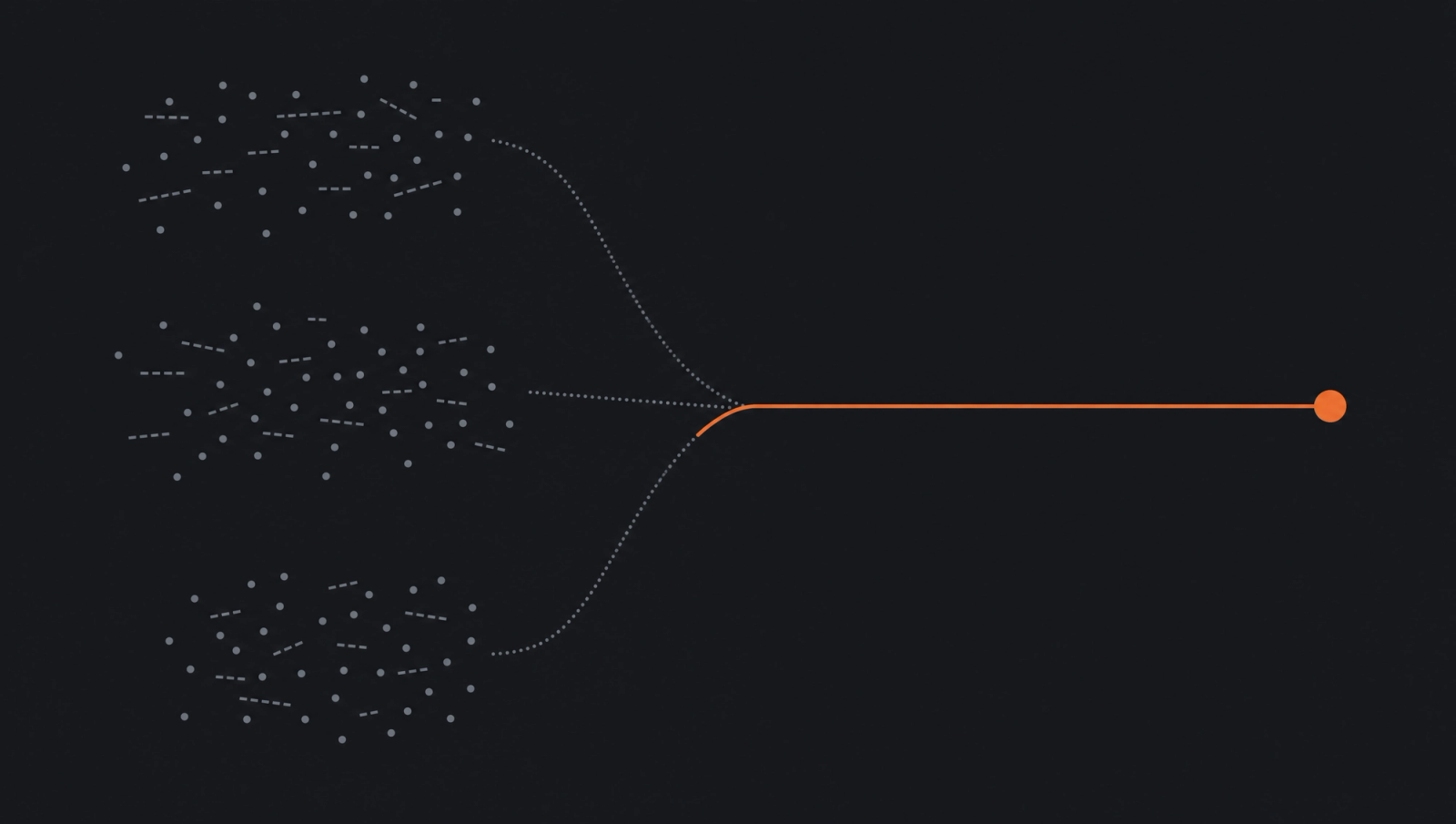
An organisational brain is a connected system that helps the business remember, understand, and act from its own context. It is not a folder of documents, a CRM, a notes archive, or a chatbot trained on policies. Those can be inputs. The brain is the layer that turns scattered information into usable memory.
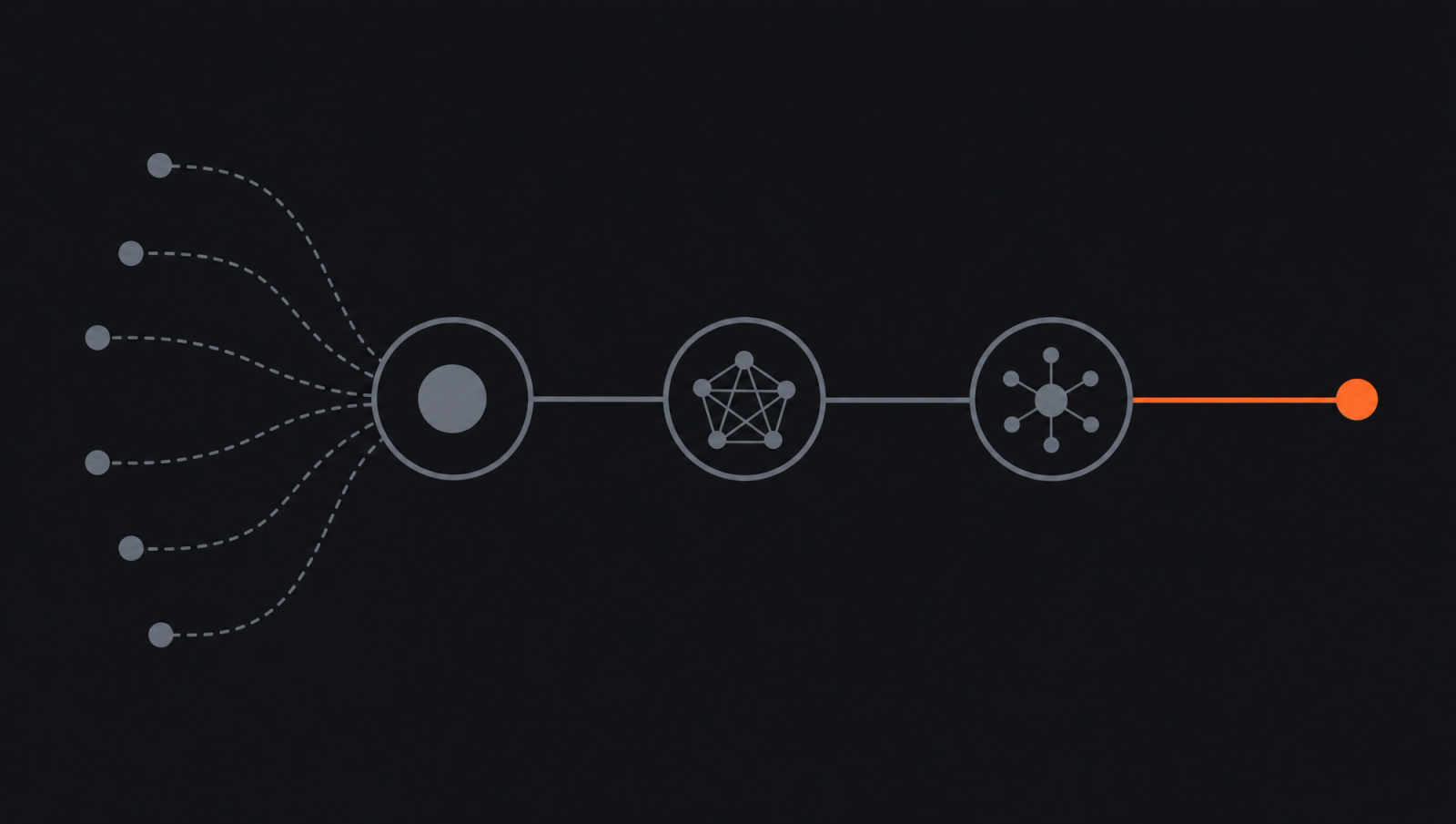
A useful version usually does four jobs: it captures conversations and decisions, connects signals across tools and clients, routes the right context into the next workflow, and improves as outcomes become part of memory.
That is why a business brain is different from a personal second brain. A personal second brain helps one person remember. It helps the company remember when the operator is not in the room.
Why does this matter more in 2026?
The need is sharper in 2026 because AI adoption has moved faster than business context. Teams now have access to capable AI tools, but most of the context those tools need still lives outside the prompt window.
OpenAI's enterprise AI reporting shows workplace AI usage moving into repeatable workflows and internal assistants. Wharton's 2025 adoption research found that daily use is rising and ROI measurement is becoming more common. McKinsey also reported that 92 percent of companies planned to increase AI investment, while only 1 percent of leaders described their companies as mature in AI deployment.
Note
Please note: AI maturity is not mainly about having access to a better model. It is about whether the business has enough living context for AI to help with real work.
Without that context, AI becomes another place people paste fragments. With it, AI can answer from the history, standards, language, decisions, and customer patterns the business has already earned.
The problem is not information. It is usable memory
Most businesses already have more information than they can use. The problem is that information is split across tools and rarely carries the reason it mattered. A proposal says what was offered, but not why a trade-off was made. A meeting note records an action, but not the client risk behind it. A CRM records a contact, but not the judgement that shaped the next step.
This is the gap the system closes. It preserves context, not just artefacts.
Business layer comparison
- CRM: stores contacts, deals and pipeline. What is usually missing: conversation nuance and judgement.
- Documents: store plans, notes and policies. What is usually missing: current relevance and decision history.
- Organisational brain: stores memory, context and actions. It is designed to close the gap between stored information and usable judgement.
Deloitte's 2026 work on institutional knowledge warns that organisations face a major transfer of expertise as experienced workers leave the workforce, and that most organisations do not consistently capture knowledge from people before it walks out the door. That is the same problem lean teams feel every week, just at a different scale. The business runs on memory, but memory is treated as personal effort.
What should an organisational brain actually do?
The system should reduce the amount of reconstruction people do before they can make a good decision. If someone has to spend 20 minutes working out what happened last time, who promised what, where the client is up to, and which assumption has changed, the business is paying an orientation tax before the real work begins.
At minimum, it should do three practical things:
- Remember what happened. Capture meetings, decisions, commitments, client signals, exceptions, and follow-up.
- Connect what matters. Link those signals to the right client, project, person, workflow, and prior decision.
- Route the next useful action. Bring context back when it changes what someone should say, decide, escalate, or complete.
This is why context is the real infrastructure. The model can be powerful, but the business advantage comes from the context wrapped around it. Two companies can use the same AI model. The one with better memory will get better work from it.
How is it different from a knowledge base or CRM?
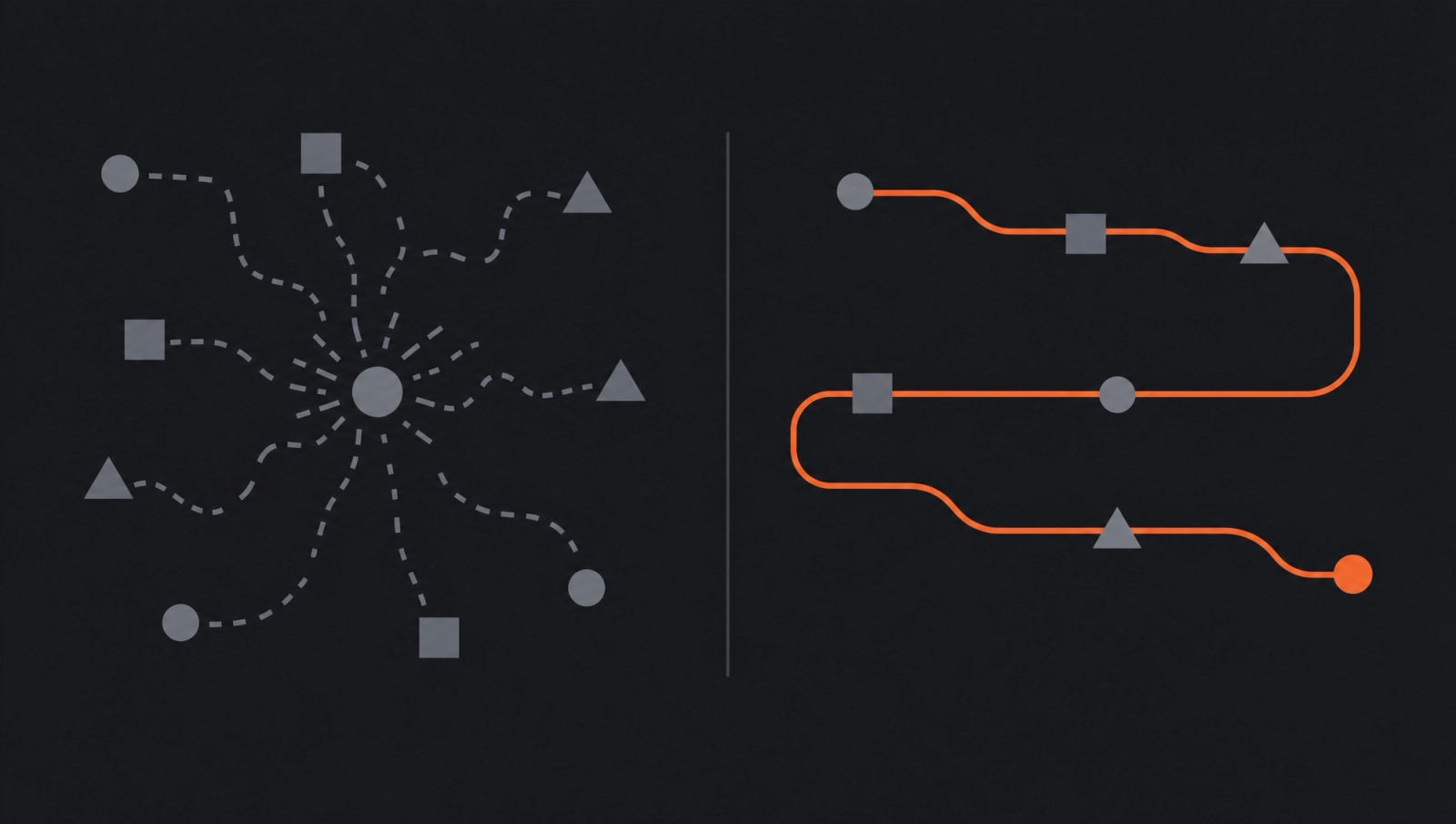
A knowledge base is usually a place people search. A CRM is usually a place people record commercial activity. The business brain is different because it is active. It does not wait for someone to remember which note to open. It brings context back into the flow of work.
The difference matters for client-facing teams. A CRM records the relationship, but it does not manage all the work around the relationship. The same pattern applies across the whole business. A document can hold a decision. The brain should help the business use that decision later.
In practice: a knowledge base answers, "where is the information?" A CRM answers, "who is this person or deal?" The brain answers, "what does the business know, what changed, and what should happen next?"
That last question is where AI starts to matter commercially. Not because the AI sounds smarter, but because the business finally has a memory it can use.
What changes when the business has one?
When a business has shared memory, work becomes less dependent on whoever remembers the most. Follow-up becomes less fragile. Meetings produce memory, not just notes. AI assistants give answers that fit the business, not generic advice.
This is the shift Catalyst Systems is building toward with Clearly. Clearly captures what happens, connects what the business knows, and gives people the context to make better judgements. It is designed for the operator carrying too much of the business in their head.
Book a Sprint conversation If your team is using AI in fragments and still relying on people to remember the business, book a Sprint conversation. We will map where context is leaking and what your first organisational brain should remember. Book a Sprint conversation.
The point is not to replace human judgement. It is to give judgement the context it needs. Your best people should not spend their day reconstructing the business before they can improve it.
What to do next
Shared memory is the system that lets a business remember what its best people know. In 2026, this matters because AI without business context stays tactical, while AI with living memory can become a compounding advantage.
Start with the places context already leaks: meetings, client conversations, decisions, handovers, and repeat follow-up. If those moments do not become memory, the business keeps paying the same tax. If they do, the organisation starts to get sharper every time it runs.