AI Consulting
AI Strategy vs AI Build vs AI Automation
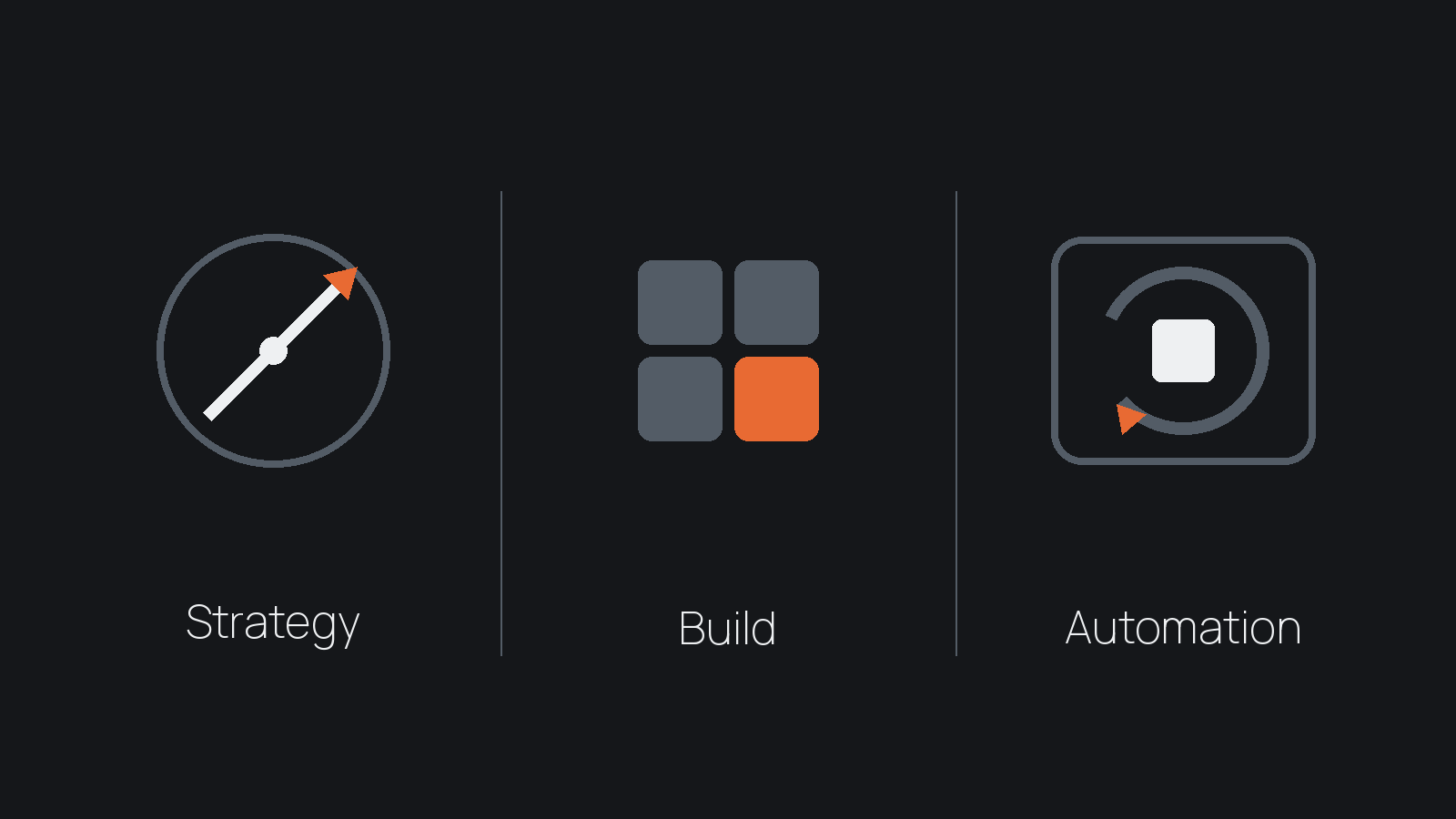
An AI strategy consultant decides where AI should change the business and where it should not. An AI build consultant turns that decision into a working capability. An AI automation consultant changes one repeatable piece of work. Those jobs connect, but they solve different problems.
For a lean Australian team, mixing them up can turn a vague priority into an expensive build or make a poor process move faster. The sequence matters: diagnose the work, build the required capability, then automate only the stable parts.
What is the difference between AI strategy, build work and AI automation?
AI strategy chooses the problem and the boundary. Build work creates and connects the capability. AI automation applies that capability to a repeatable task with a trigger, output, owner and review rule.
AI strategy comparison
- Decides where to act and what outcome matters: ai build: Creates the capability people can use and supervise; ai automation: Changes one repeatable piece of work.
- Produces priorities, boundaries, ownership and measures: ai build: Produces a tested release, access rules, training and monitoring; ai automation: Produces a defined trigger, action, exception path and review point.
- Fails when it becomes a broad plan with no operating decision: ai build: Fails when technical delivery ignores adoption and real work; ai automation: Fails when it speeds up waste, rework or an unclear handoff.
The Australian Government’s National AI Centre separates early planning guidance from more detailed guidance for organisations with complex or higher-risk uses. Its Essential AI Practices connect AI to business goals, governance, risk, oversight and transparency. That is why the choice is wider than picking a tool.
When do you need an AI strategy consultant?
You need an AI strategy consultant when the business has several possible use cases, unclear priorities or no agreed way to judge value. The consultant should help leaders choose where to act before anyone commits to a product or project.
The work should expose the current burden, desired outcome, affected people, information needs, risk, owner and measure. NIST’s AI Risk Management Framework asks organisations to understand intended purpose, business context, risk tolerance and requirements before managing a system across its life. OECD guidance also treats the AI system lifecycle as iterative, covering planning, data, building, testing, deployment, monitoring and retirement.
A useful strategy engagement ends with decisions. It may recommend a small pilot, preparation work or no AI for that use case. Our guide to what a good AI consultant does first explains why diagnosis should begin with the work. If the process is still disputed, business process mapping is the better next step.
Decision: Strategy does not prove that a system works. It decides what is worth proving, under which conditions, and who can stop the work.
When do you need an AI build consultant?
You need an AI build consultant when the target outcome is clear but the business cannot yet deliver the capability safely and reliably. This is build work: connecting approved information, configuring the system, designing access, setting review rules, testing with real cases, training users and measuring results.
A build is not complete when a demonstration works. The National AI Centre’s detailed adoption guidance calls for clear accountability, acceptance criteria, pre-deployment testing, monitoring and human control. The Australian Cyber Security Centre also advises small businesses to check vendor data practices, verify outputs and keep people involved in sensitive decisions in its AI guidance for small business.
For a first release, use one workflow, one owner and one measure. The guide to scoping phase one AI automation shows how to keep the boundary narrow without creating throwaway work. Ownership must continue after launch, which is why leaders should also decide who owns AI in the business.
When do you need an AI automation consultant?
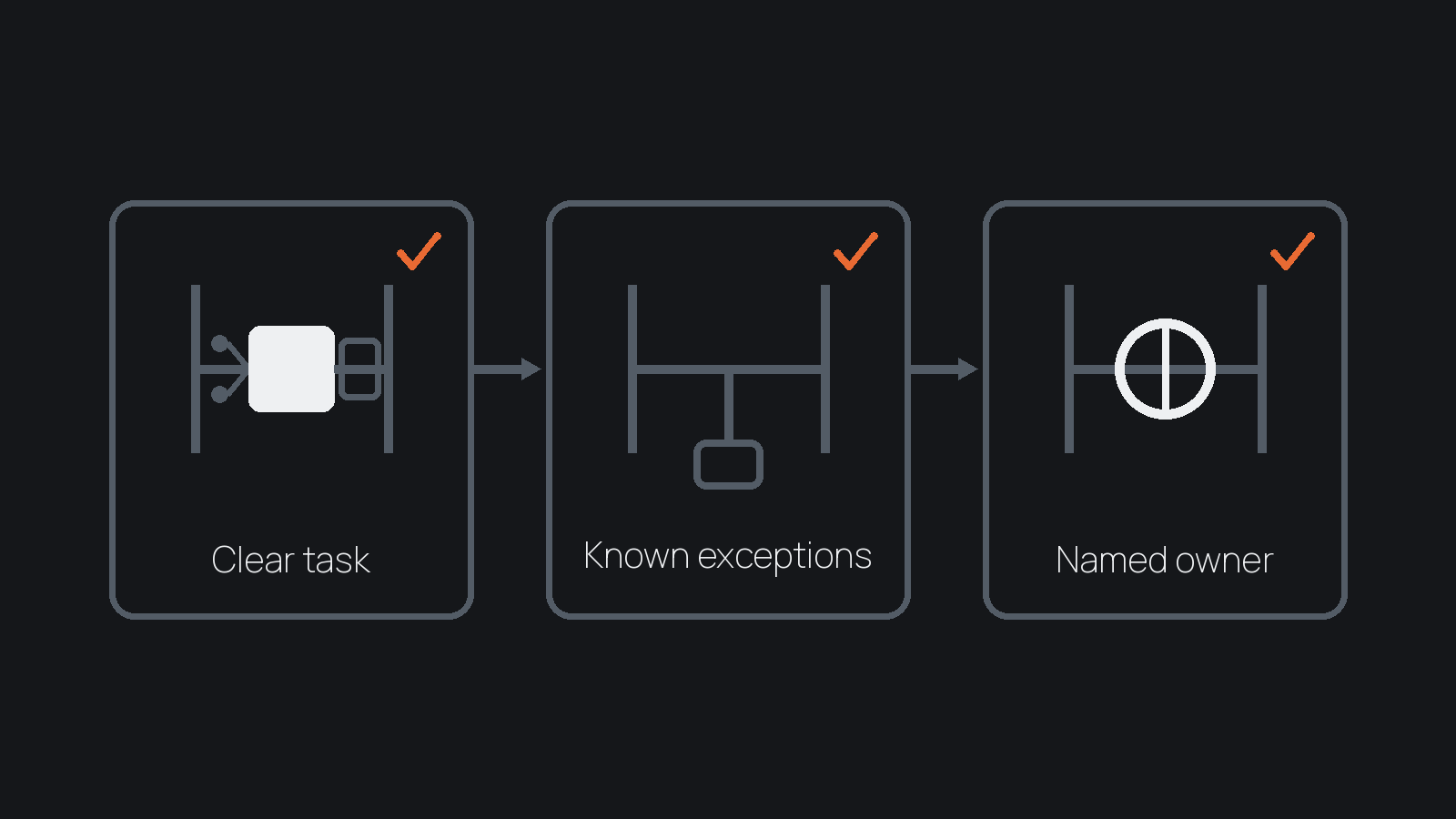
You need an AI automation consultant when one recurring task is understood well enough to change. The task should have a clear trigger, approved inputs, a bounded output, a visible exception path and a person accountable for the result.
Automation is narrower than strategy and narrower than the full build. It might classify an incoming request, draft a response for review or route a confirmed action. The National AI Centre’s workflow redesign guidance recommends clear roles, checks, escalation paths and feedback loops, then testing the redesigned process before building it.
This article stops at choosing the right consulting scope. For task selection, rules and review criteria, read what to automate first. For placing AI inside a wider process, use the guide to AI workflow automation. That boundary matters because automation without diagnosis can preserve approvals, handoffs or reports that should have been removed.
Which consultant should you hire first?
Hire against the decision you cannot make. The provider title is secondary. Use this three-step path.
- Diagnose the uncertainty. If leaders cannot agree on the outcome, priority, owner or acceptable risk, start with strategy. A tool shortlist is premature.
- Check the capability gap. If the use case is agreed but the team lacks a tested way to deliver, supervise and maintain it, start with build work.
- Test the task boundary. If the capability exists and the task repeats with stable inputs and review, scope the automation. Keep ambiguous exceptions with people.
If one person still carries the context required to make the workflow work, fix that dependency before handing more actions to software. The guide to systemising a small business shows how to preserve context while keeping judgement with people.
What should the first engagement produce?
The first engagement should produce a decision the business can verify. Strategy should name the priority and boundary. Build work should create a controlled capability that people can test. Automation should improve one repeatable task without hiding errors or moving work elsewhere.
As of September 2026, Australian guidance treats AI adoption as an ongoing management responsibility, not a one-off purchase. Start with the smallest question that can be answered with evidence, then expand only when the result is useful, trusted and owned.
Frequently asked
- What does an AI strategy consultant do?
- An AI strategy consultant identifies where AI should change the business, sets priorities and boundaries, assigns ownership, and defines the evidence required before a build begins.
- What is the difference between AI strategy and AI build?
- AI strategy decides where to act and what result matters. AI build is the build work that creates, tests and introduces the capability people will use.
- What does an AI automation consultant automate?
- An AI automation consultant changes a defined, repeatable task with clear inputs, an expected output, exception handling and a human review rule suited to the risk.
- Should a small business start with AI strategy or automation?
- Start with strategy when the outcome, owner or risk is unclear. Start with automation only when the task is stable, repeatable and easy to review.