Operating Intelligence
How to Systemise a Small Business Without More Complexity
To systemise a small business, start with the work that keeps coming back to the same person. A small business is systemised when important work no longer depends on one founder, manager, or senior operator remembering what to do next.
The goal is not more process for its own sake. The goal is less drag. The business should remember decisions, client context, ownership, follow-up and repeatable work well enough that people can act without rebuilding the same picture every week.
What does it mean to systemise a small business?
Systemising a small business means turning recurring work into a reliable way of operating. It gives people a clear path for what happens next, where context lives, who owns the next step, and how the work improves over time.
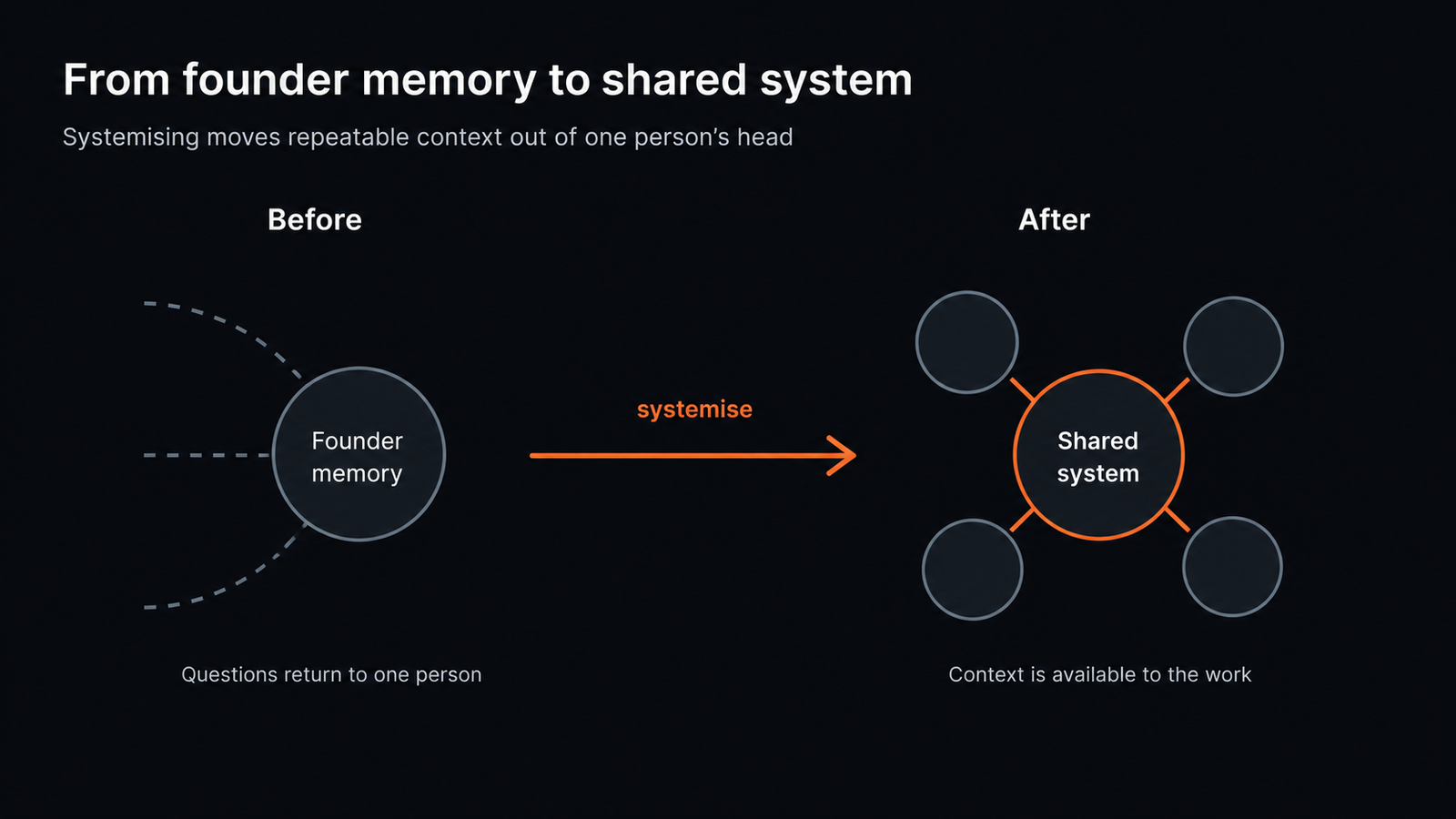
A system is not just a checklist or a new app. A useful system has memory. It holds the reason behind the work, not just the instruction. That matters because most small businesses do not break from lack of effort. They break because too much context lives in people's heads.
Why do small business systems become more work?
Small business systems become more work when they ask people to document everything without changing how work actually moves. The team gets another tool, another folder, or another checklist, but the founder still has to explain the context.
That is why many systemising projects stall. They treat the symptom, which is visible mess, rather than the cause, which is missing business memory. If a process does not preserve the judgement behind the work, people still return to the person who remembers.
Tip
Author's tip: if a system only works when the founder keeps reminding everyone to use it, the founder is still the system.
What should you systemise first?
Systemise the repeatable work that is frequent, costly, and memory-dependent. Start where the business repeatedly loses time reconstructing context, chasing action, or answering the same questions.
A useful first pass is to look for four signals:
- Repeated questions: the same person keeps being asked how something works.
- Repeated handoffs: work slows because the next person lacks the reason behind the task.
- Repeated follow-up failures: clients, leads, or internal commitments need chasing by memory.
- Repeated owner intervention: the founder steps in because the business has no durable context.
How do you systemise without losing human judgement?
You systemise without losing human judgement by separating repeatable structure from human decision-making. The system should carry context, timing and handoffs. People should still make the calls that need taste, empathy, commercial judgement and trust.
This is where AI and automation can help, but only after the workflow is clear. If you automate a messy process, the mess simply moves faster. The better approach is to decide what the business should remember, where that context should live, and which next actions can be routed automatically.
What is the difference between a process and business memory?
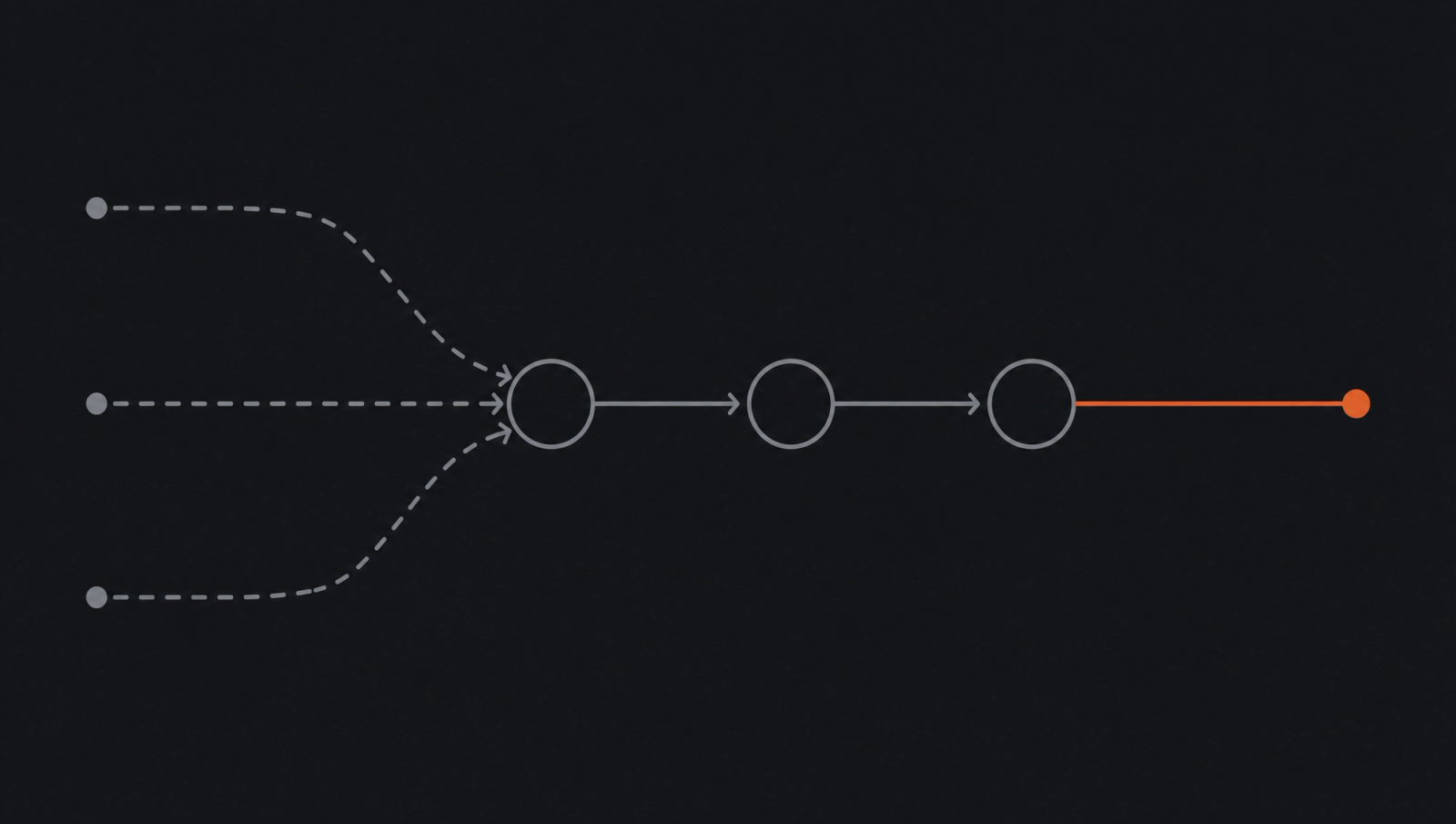
A process tells people what steps to follow. Business memory tells people why those steps matter in this situation. A process might say to follow up after a discovery call. Business memory knows what the client hesitated about, what was promised, and why the next message should be specific.
The strongest small business systems combine both. They make routine work repeatable while preserving the context that changes judgement.
What should a systemised business feel like?
A systemised business should feel calmer, not more bureaucratic. People should know where work lives, what matters, and what needs action. The founder should feel less like the human router for every decision.
The practical test is simple: can the business handle tomorrow's repeatable work without someone rebuilding yesterday's context? If yes, the business is becoming systemised. If no, it is still running on memory.
Book a Sprint conversation If your business is carrying too much in people's heads, Catalyst Systems can help map what should become system first. Book a Sprint conversation.
Your next step
Choose one workflow that keeps creating drag: client follow-up, handovers, quoting, onboarding, or meeting actions. Write down what people keep having to remember. That is the first place to build a system.