Operating Intelligence
AI Sales Assistant for Real Estate Agents: What to Automate
An AI sales assistant for real estate agents should not replace the agent. It should remove the repeatable work that stops the agent from being in the right conversation at the right time.
In real estate sales, the valuable work is still human: winning trust, reading motivation, negotiating, advising vendors, and knowing when to pick up the phone. The problem is that agents spend too much time around that work, chasing notes, updating CRMs, preparing appraisals, writing follow-ups, and trying to remember which contact needs attention.
A good AI sales assistant for real estate agents helps with the work around the relationship so the agent can spend more time inside the relationship.
What an AI sales assistant should actually do
The useful version is not a chatbot sitting on a website. It is an operating layer around the sales workflow.
It should help the agent:
- capture sales context from calls, meetings, and inspections
- prepare appraisal notes and comparable-sale context
- draft follow-up messages for review
- summarise buyer feedback for vendor conversations
- surface contacts who need attention
- create reminders with the reason attached
- keep the CRM useful without manual drag
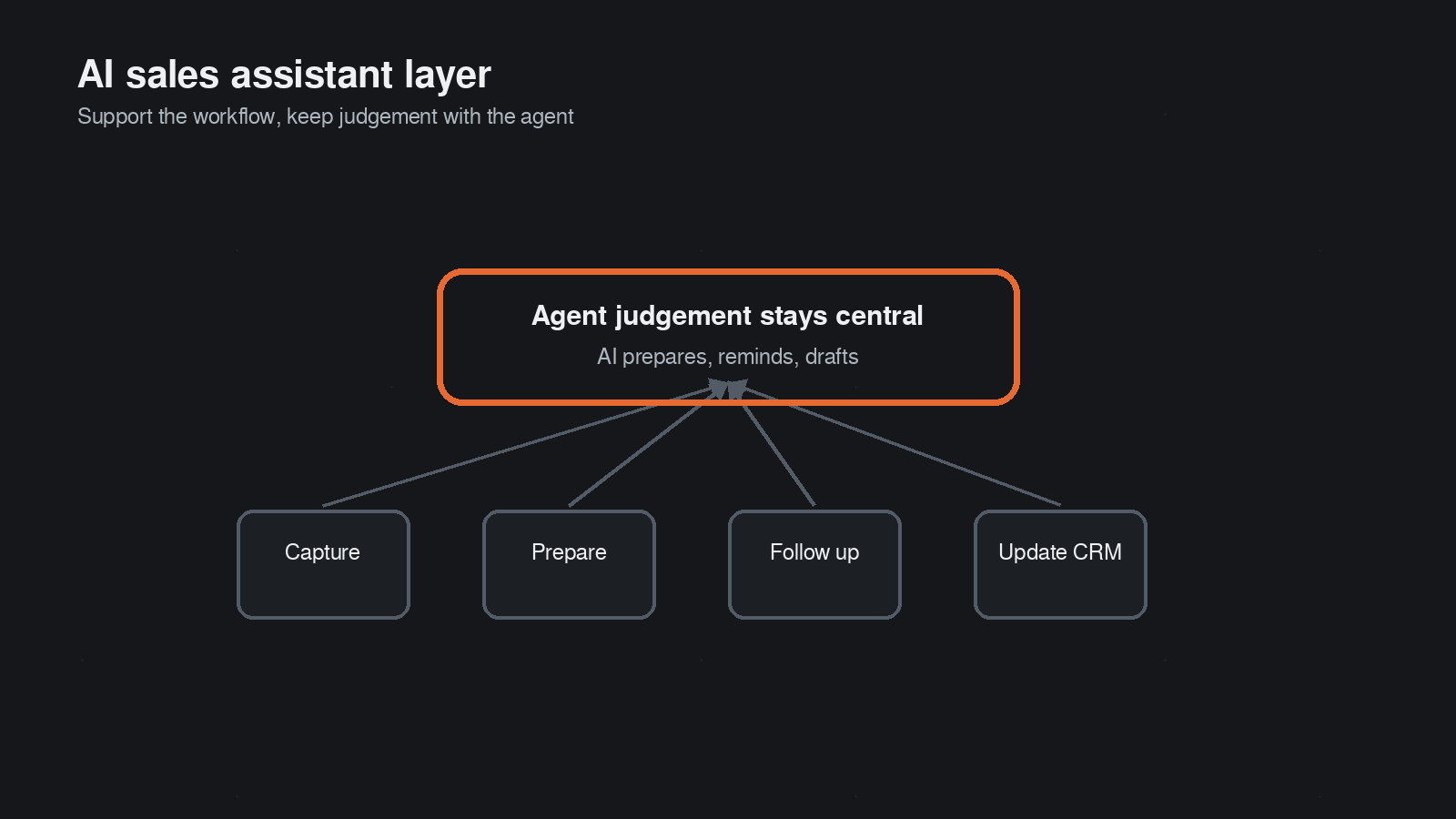
This connects to AI adoption. AI fails when it adds another place to work. It works when it fits the sales motion that already exists.
Practical rule: If the agent has to copy context into three places before the AI helps, the assistant is creating admin, not removing it.
Start with appraisal preparation
Appraisal preparation is a strong first use case because it combines data, context, timing, and judgement.
An AI assistant can help gather recent comparable sales, pull notes from past contact, summarise property or suburb signals, and prepare a checklist for the agent to review.
The agent still decides the strategy. The assistant helps make sure the agent walks in with less friction and fewer missing details.
This is the same pattern behind good AI vendor reports. AI prepares and structures the information. The agent reviews it and uses judgement.
Automate follow-up, not relationships
Follow-up is one of the clearest areas for automation, but it is also one of the easiest to get wrong.
An AI sales assistant can draft messages after open homes, appraisal enquiries, vendor updates, and database triggers. It can suggest timing, segment contacts, and remind the agent when a reply needs attention.
But the system should not flatten every contact into a sequence. A past vendor, a serious buyer, a neighbour testing the market, and a cold portal enquiry should not all receive the same style of contact.
That is why client follow-up needs context. Automation gets the message moving. Memory keeps it relevant.
Use AI to work the database
Many agencies have years of contacts in the CRM. The problem is not that the data has no value. The problem is that nobody has the time to work it consistently.
AI can help by looking for signals:
- old buyers who may now be sellers
- past clients near recent local sales
- contacts who have re-engaged with emails
- property owners with stale notes but strong history
- appraisal leads that never converted
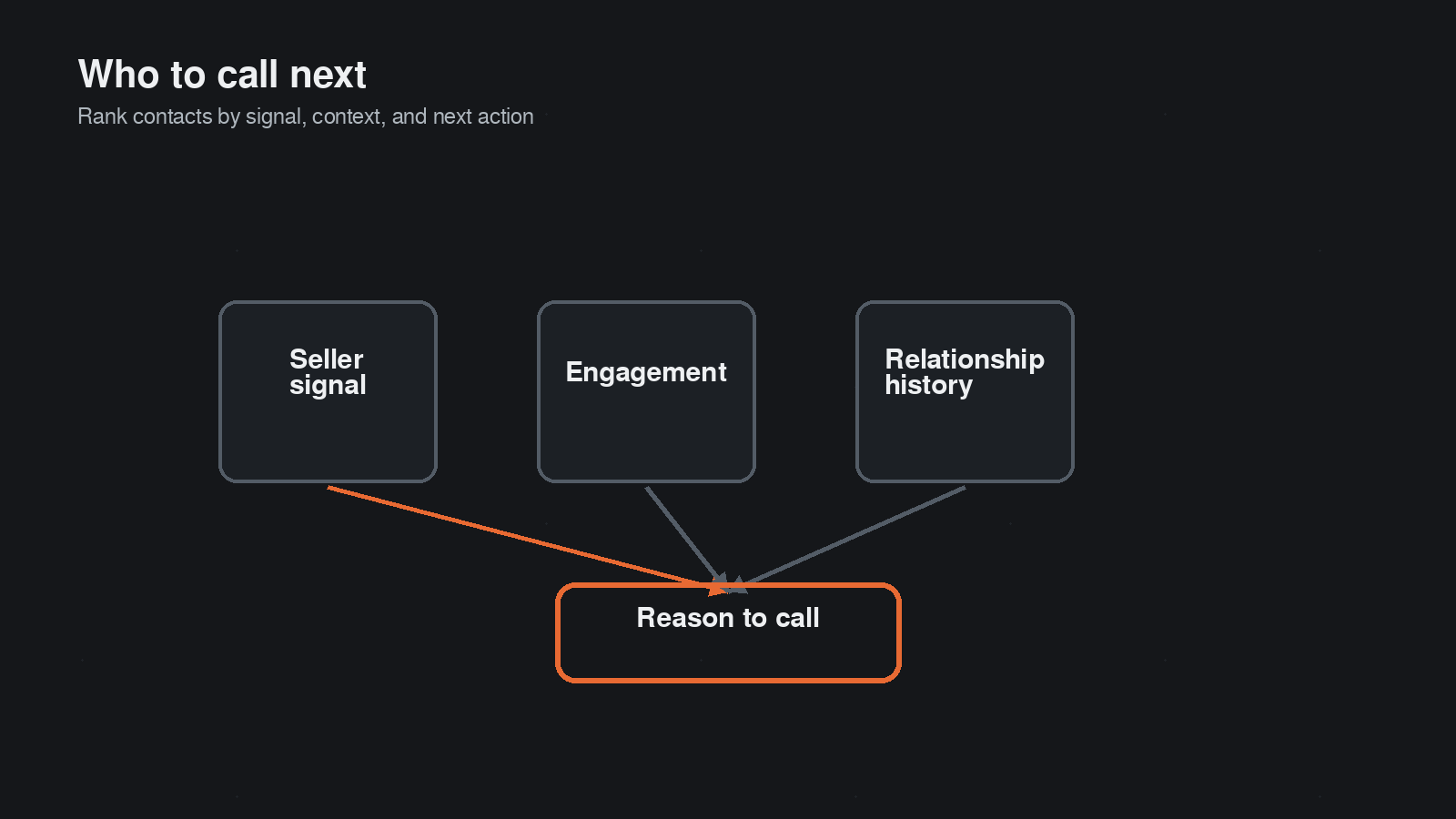
This is where more than a CRM becomes important. The CRM holds records. The assistant needs context, history, and next-action logic to make those records useful.
Keep human checkpoints in the right places
Real estate sales has compliance, privacy, and reputation risk. An AI sales assistant should not send every message or make every decision without review.
Use three levels of control:
Workflow comparison
- Low-risk admin: ai can prepare: CRM notes, reminders, draft summaries; human should approve: sample checks and corrections.
- Sales follow-up: ai can prepare: suggested email or SMS drafts; human should approve: first sends, sensitive contacts, high-value leads.
- Strategic moments: ai can prepare: appraisal strategy, vendor advice, negotiation context; human should approve: always agent-led.
This is also true when connecting AI to a CRM. The workflow should decide where the human checkpoint belongs before the assistant goes live.
What to automate first
For most real estate sales teams, the best starting sequence is:
1. call and inspection note capture 2. appraisal prep checklist 3. open-home follow-up drafts 4. vendor update summaries 5. database reactivation prompts 6. CRM clean-up and next-action reminders
Do not start with the flashiest workflow. Start where the agent loses time every week or where missed timing costs a listing.
Where Clearly fits
Clearly can act as the memory layer around an AI sales workflow.
It helps capture what happened in conversations, inspections, appraisals, and internal meetings, then brings that context back when the next action is due. That makes it useful for agencies that already have a CRM but still lose the story behind the record.
For an agency, that means fewer cold notes, fewer forgotten commitments, better handover, and more useful follow-up. It also means the assistant can be more grounded because the context is not trapped in someone's head.
If you are exploring an AI sales assistant for real estate agents, book a conversation with Catalyst Systems. We can help you identify which sales workflows should be automated first, where human review needs to stay, and how Clearly can preserve the context that makes follow-up feel personal.