Operating Intelligence
How to Follow Up With Clients Consistently
To follow up with clients consistently, the business needs to remember more than the date. It needs to remember why the next conversation matters, what was said last time, what the client cared about, and what action should happen next.
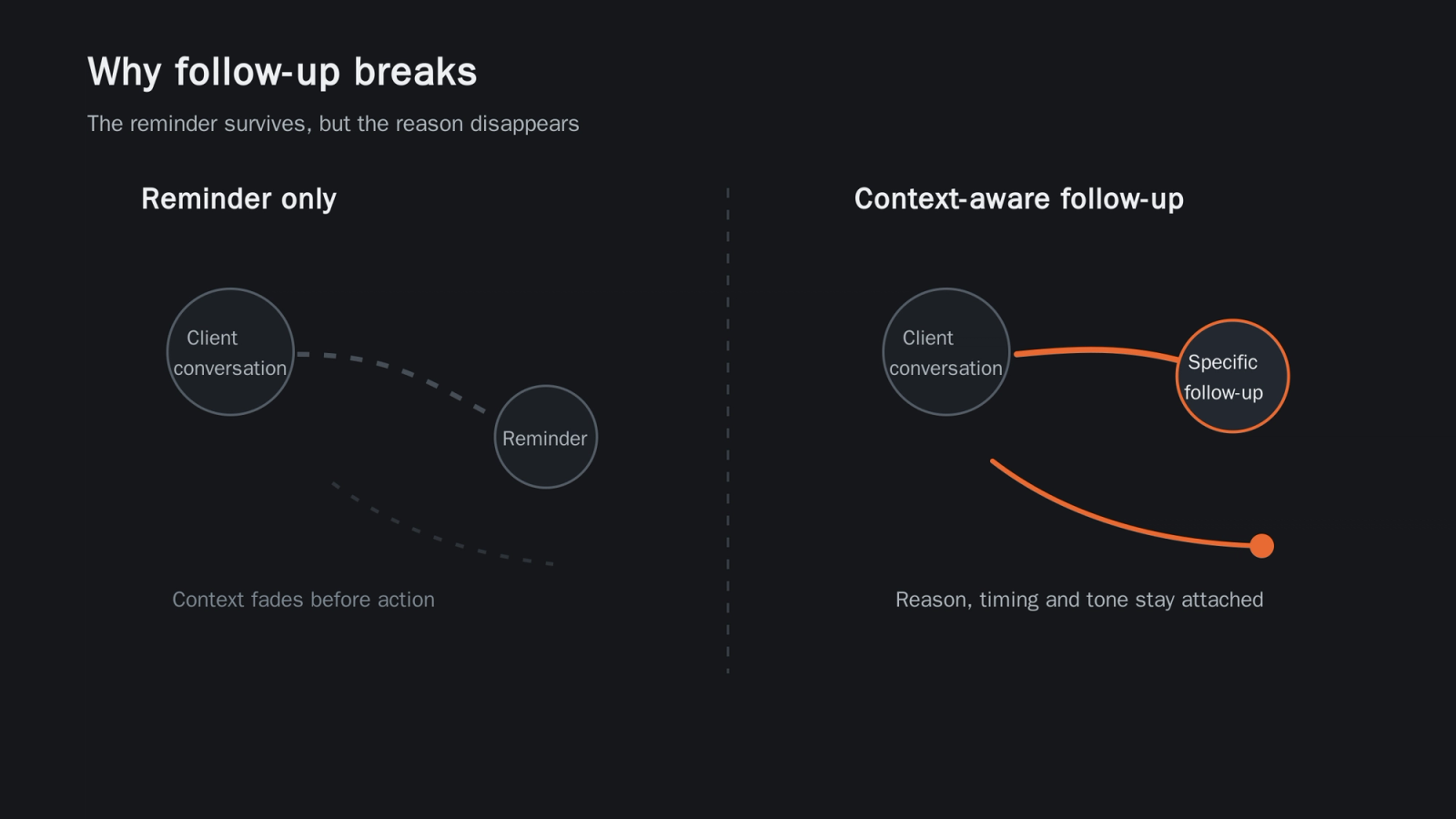
Most follow-up does not fail because people do not care. It fails because the context is scattered. The reminder arrives, but the reason behind it has disappeared.
Why is consistent client follow-up so hard?
Consistent client follow-up is hard because client work is conversation-heavy and context-dependent. A CRM reminder can tell you to follow up. It cannot always tell you what the client hesitated about, what mattered emotionally, or what tone the next message needs.
That is why client-facing operators often become consistently inconsistent. They know follow-up matters, but the system does not carry enough context to make follow-up easy.
What should good client follow-up remember?
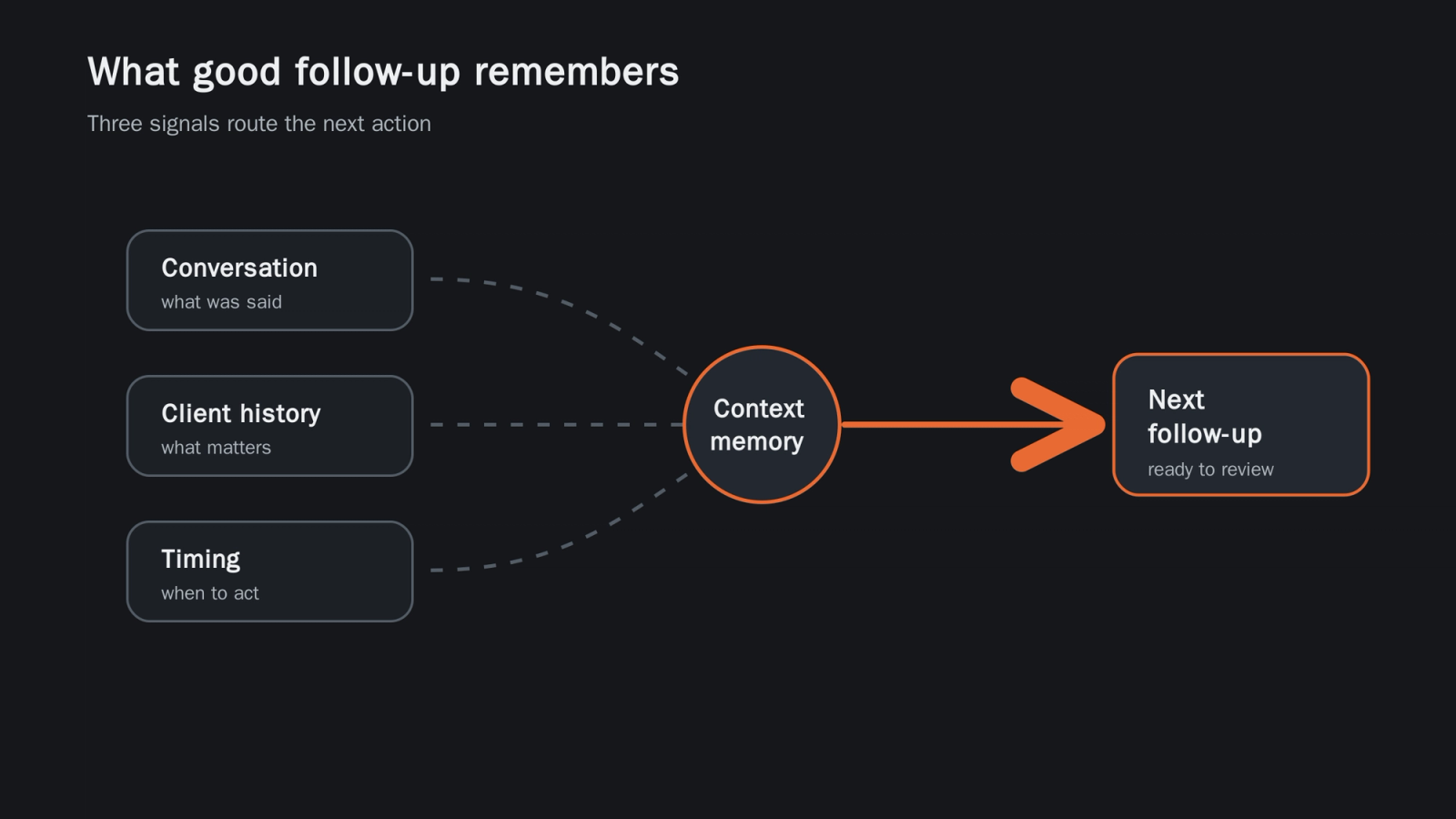
Good client follow-up should remember the reason for the next action. It should preserve the client history, the last conversation, the open concern, the promised next step, and the timing that makes the message useful.
Useful follow-up memory usually includes:
- The client's goal, hesitation or constraint.
- The promise or next action agreed in the last conversation.
- The right timing and channel for the next touchpoint.
- The context a human needs before sending or calling.
Why CRM reminders are not enough
CRM reminders are helpful, but they are often thin. They can say call Sarah on Thursday. They rarely carry the full reason Sarah needs that call, what changed last time, and what would make the follow-up feel specific rather than generic.
A reminder is a trigger. A follow-up system is memory plus timing plus action. It should bring the right context forward before the operator has to search for it.
Tip
Author's tip: if the follow-up starts with searching notes, the system reminded you but did not prepare you.
How can AI help with client follow-up?
AI can help with client follow-up by capturing conversation context, identifying the next useful action, drafting a message in the right tone, and surfacing the client history before a human reviews or sends it.
The best use is not generic automation. It is context-aware preparation. The system should make the human more timely and more specific, not turn the relationship into a sequence of robotic nudges.
What should stay human in client relationships?
Judgement should stay human. Sensitive follow-ups, price conversations, relationship repair, complex advice and high-stakes decisions should not be blindly automated. The system can prepare the context and draft the option. A person should decide what is appropriate.
That balance is where trust comes from. Clients feel remembered, not processed.
How do you build a follow-up system that compounds?
Build a follow-up system around three moves: capture the conversation, connect it to the client record, and route the next action back when it matters. Each follow-up should make the next one easier because the business knows more than it did before.
Over time, the system should learn which clients need speed, which need reassurance, which need space, and which opportunities are going cold. That is how follow-up becomes a business memory layer, not a personal discipline problem.
Book a Sprint conversation If follow-up still depends on memory, Catalyst Systems can help design a system that remembers why the next conversation matters. Book a Sprint conversation.
Your next step
Review the last five client opportunities that stalled. For each one, ask what context was missing when follow-up was due. That missing context is what your follow-up system needs to remember.