AI Consulting
AI for Professional Services: Keep Judgement in Charge
AI for professional services should clear the work around a decision while leaving the decision with the qualified person. A useful system can qualify an enquiry, assemble a meeting brief, draft notes and track commitments. It should not decide what a client needs, whether advice is sound or which exception changes the answer.
That boundary matters because clients buy judgement shaped by context. This guide maps where automation fits across the client service workflow, where approval belongs and how an Australian firm can begin without turning professional care into unchecked output. This guide covers shared client-service work, not professional services automation (PSA) software selection or accounting-specific AI tool comparisons.
Where does AI fit in a professional services workflow?
AI fits best where work is repeatable, the inputs can be defined and a person can check the output before it affects a client. Risk rises when the task depends on unstated context, professional duties or a choice that can materially affect someone.
This division gives firms a practical starting point:
Workflow work comparison
- Enquiry, meeting and document preparation: suitable role for ai: Classify, summarise and assemble; human responsibility: Confirm context and correct errors.
- Notes, proposals and follow-up drafts: suitable role for ai: Produce a reviewable first version; human responsibility: Approve claims, scope and tone.
- Advice, exceptions and client decisions: suitable role for ai: Surface relevant history and options; human responsibility: Apply expertise and make the decision.
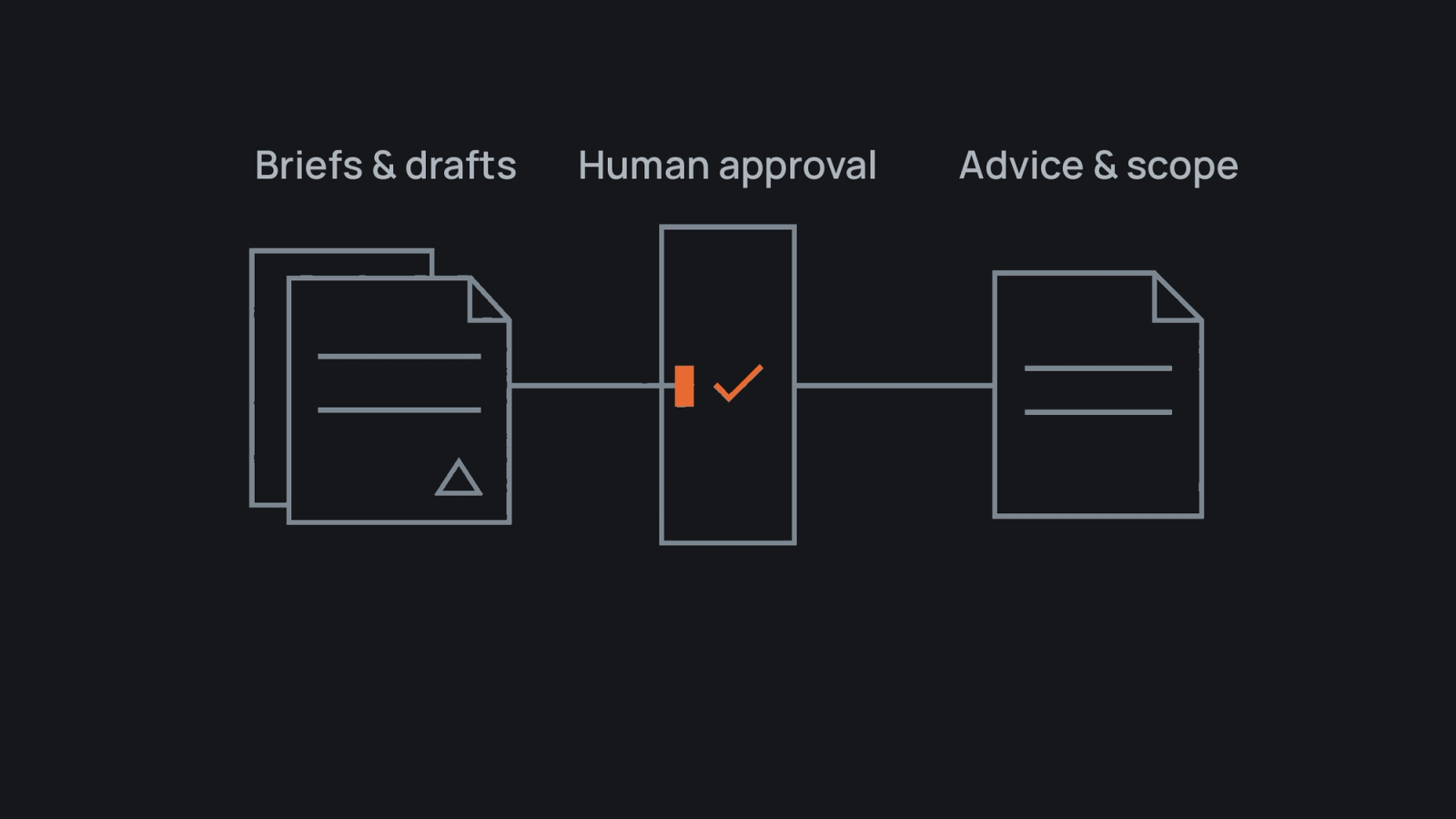
The Australian Government's National AI Centre essential AI practices say organisations remain accountable for how AI is used and should maintain human control. A firm can turn that principle into a workflow rule: AI may prepare, route and remind; an accountable person approves anything that carries professional weight.
Start with enquiry qualification and onboarding
Enquiry qualification is a sensible early use because the desired output is usually a complete, well-routed brief. AI can extract the service requested, deadlines, location, likely conflicts and missing information from an approved form or email. A person then decides whether the firm can act and what the enquiry requires.
Onboarding can follow the same pattern. A defined workflow can prepare a checklist, request standard documents, create internal tasks and flag gaps. Before automating it, use business process mapping to record the current route and process documentation to state who checks identity, consent, conflicts, scope and exceptions. This avoids making a confused intake process run faster.
Privacy deserves an explicit gate. The Office of the Australian Information Commissioner says personal information entered into or produced by an AI product remains subject to privacy obligations. Its guidance on commercially available AI products recommends due diligence, clear permitted uses, staff training and human oversight.
Prepare meetings before automating the advice
Meeting preparation can save professional time without asking AI to form a client view. A useful brief can collect the last meeting summary, open commitments, recent correspondence and relevant documents into one place. The adviser checks the source material and enters the conversation with continuity.
After the meeting, AI can draft notes, separate facts from proposed actions and assign commitments for review. This is stronger than leaving notes in an inbox because the approved record becomes available for the next interaction. Our guide to AI workflow automation explains how to connect capture, routing and review rather than treating each task as a separate shortcut.
Note
In practice, this means: Record the source, reviewer and approval status beside every client-facing output. A polished draft is still a draft until the named professional accepts it.
Draft proposals and follow-up with approval gates
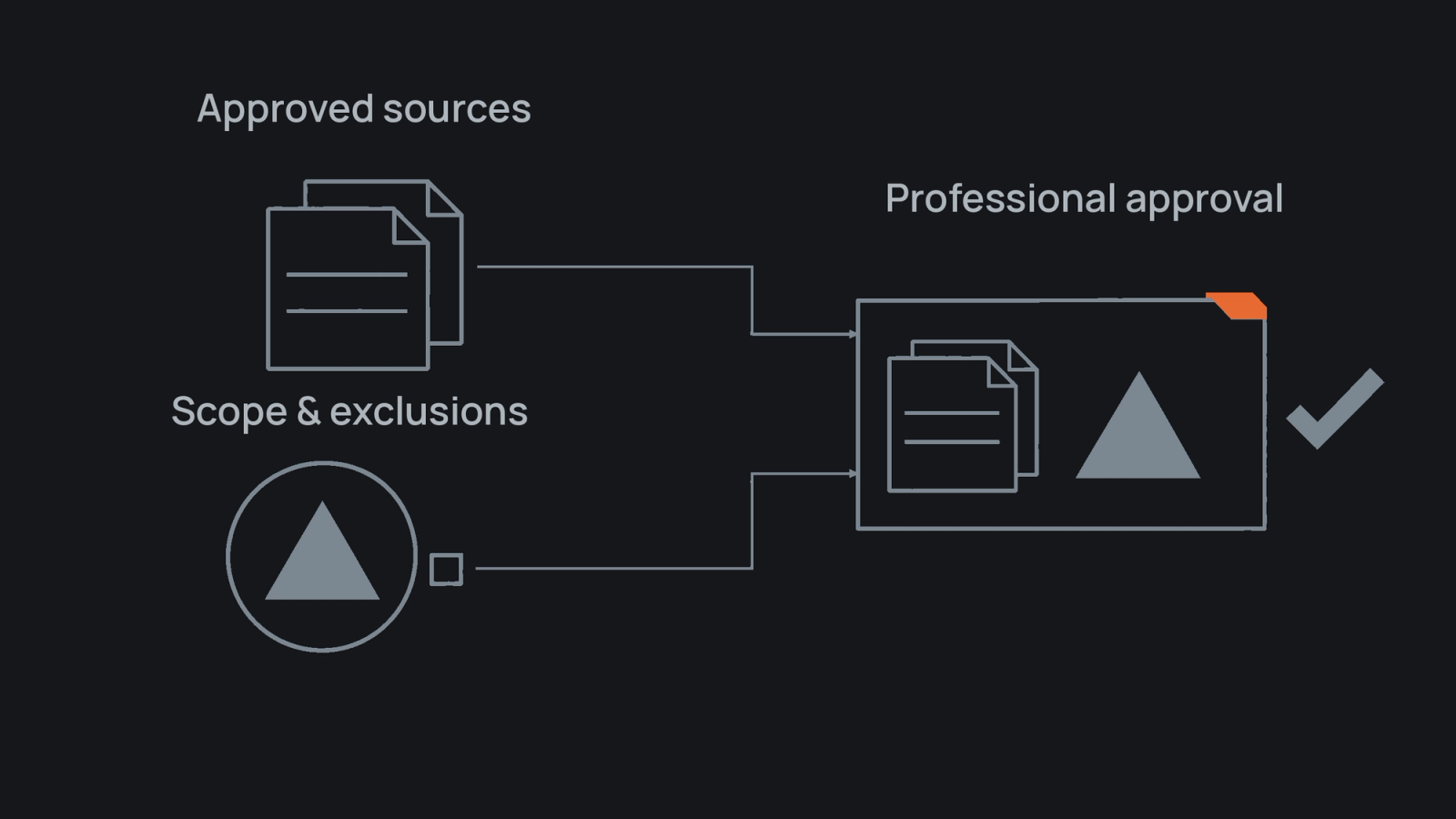
Proposal and follow-up work contains repeatable preparation and judgement-heavy choices. AI can pull approved service descriptions, draft a proposal outline, restate meeting goals and prepare a follow-up email. The engagement lead still confirms scope, fees, exclusions, claims and whether the proposed work suits the client.
Commitment tracking is especially useful. Agreed actions can be recorded with an owner and due date, then surfaced before they are missed. Business process automation is helpful when the route is stable, while systemising a small business explains why ownership and handovers need to be clear first.
This boundary is already visible in regulated professions. The Tax Practitioners Board's 2026 guidance on AI and professional conduct says tax practitioners remain responsible for accuracy and must supplement AI output with professional judgement. It also directs practitioners to consider confidentiality, storage, review and whether a tool suits the task.
Use knowledge retrieval to prepare judgement
Knowledge retrieval should bring the right history to the professional, not manufacture certainty. A system can find an earlier decision, surface the source passage and show which client or matter it belongs to. The professional can then test relevance, currency and any changed circumstances.
This is where connected records matter more than another chat window. What Clearly remembers shows how approved conversations, decisions and commitments can support later work. The overview of AI tools for Australian businesses can help firms separate personal drafting tools from systems used with shared client context.
Legal guidance makes the review duty plain. The Victorian Legal Services Board and Commissioner states that lawyers remain responsible for independent advice, confidentiality and verification in its statement on AI in Australian legal practice. The same workflow lesson applies more broadly: source-backed retrieval can prepare a professional, but accountability cannot be delegated to software.
How should firms introduce AI for professional services?
A firm should define approval based on consequence and verifiability. Low-consequence drafts with clear sources may need a quick check. Advice, representations, pricing, regulatory work and decisions affecting a client's rights or interests need a qualified reviewer with authority to correct or reject the output.
Write that boundary into the workflow. Record permitted information, prohibited information, approved tools, the reviewer, the evidence required and what happens when the output conflicts with professional judgement. Then test one workflow with real examples and inspect the errors before widening access. The AI readiness assessment guide covers the conditions that make this work repeatable.
Thomson Reuters' 2025 professional services report found growing day-to-day use alongside a need for firm-wide policies, training and client conversations. Tool access alone does not settle who is accountable.
Keep client judgement visible
AI for professional services earns its place when it removes search, re-entry and drafting work that crowds out client attention. Start with one workflow, map the decision points and require evidence at every approval gate. Catalyst Systems helps Australian firms connect that workflow to the context their people need, so automation supports the adviser rather than obscuring responsibility.
Before automating this workflow, check whether the process, information, ownership and review controls are ready. The assessment helps identify the first constraint to fix.
Take the AI readiness assessmentFrequently asked
- Where does AI fit in professional services?
- AI fits best in enquiry qualification, preparation, summarisation, drafting, retrieval and commitment tracking where a qualified person can review the result.
- Should AI give client advice?
- AI may help prepare evidence and draft options, but advice and consequential decisions should be approved by a qualified professional who understands the client context.
- Is professional services automation software the same as AI workflow automation?
- No. PSA software usually manages projects, time, resources and billing. AI workflow automation can prepare or route information inside a specific client-service process.
- How should a firm start using AI?
- Choose one bounded workflow, define permitted information and approval rules, test normal and awkward cases, inspect errors and expand only when the control model works.