AI Consulting
How Much Does AI Consulting Cost in Australia?
AI consulting cost varies because quotes can cover strategy workshops, software projects or staff augmentation. A useful comparison starts with the result being bought and the evidence required to accept it.
As of September 2026, there is no standard Australian fee for AI consulting. The Australian Bureau of Statistics reported that 12% of Australian businesses used AI at work in 2024-25, but the scope, risk and required connections still decide the consulting work involved (ABS, 2026).
What does AI consulting cost in Australia?
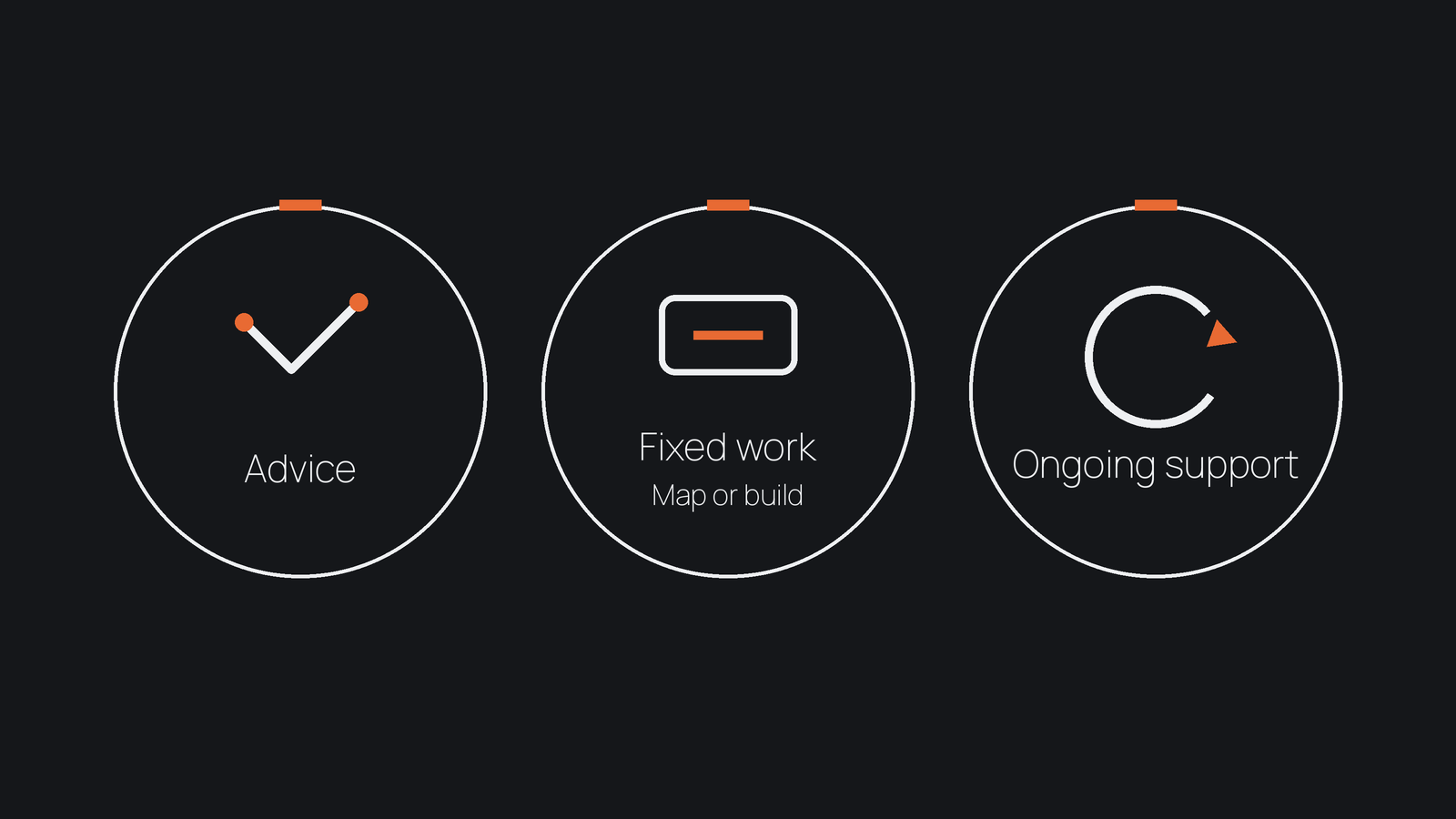
AI consulting in Australia can be sold as advice, a fixed diagnostic, a defined build or continuing support. A price without one of those boundaries is too vague to compare.
Catalyst publishes three prices for its own work. The map costs $999 and takes two weeks. That fee is credited in full against the build. The build costs $2,500 to $5,000, scoped from the map, and the retainer starts from $750 a month.
Those figures describe Catalyst's offer, not a market average. Our guide to what a good AI consultant does explains the work that should happen before a tool is chosen.
Which AI consulting pricing model are you buying?
The pricing model should match the decision you need to make. A fixed diagnostic is useful when the work is unclear, while a fixed build suits a bounded workflow with agreed acceptance criteria.
Pricing model comparison
- Advisory or workshop: what it should buy: Decisions, priorities and written recommendations; check before signing: Named outputs and decision owner.
- Fixed map or discovery: what it should buy: Current workflow, constraints and recommended first scope; check before signing: Whether the map is yours to keep.
- Fixed build: what it should buy: A defined workflow set up and tested; check before signing: Acceptance criteria and exclusions.
- Monthly retainer: what it should buy: Monitoring, changes and further work; check before signing: Included capacity and cancellation terms.
What changes the price in an AI consulting proposal?
The price usually changes with the workflow boundary, information quality, software connections, risk controls and acceptance testing. A proposal should show how each factor affects the deliverables.
Start with the workflow. A business process map records the trigger, steps, decisions, hand-offs, information and exceptions. That evidence helps the consultant quote a defined change rather than a general ambition.
Information access and software connections can add discovery and testing. The quote should name each system involved, the available access, the records being used and who can approve changes. A phase one AI automation scope keeps the first build bounded by one workflow, one owner and one measure.
Risk changes the review work. The Office of the Australian Information Commissioner says product due diligence should cover intended use, testing, human oversight, privacy and security risks, and access to personal information (OAIC, 2025). A related proposal should assign the privacy review and its deliverables.
Testing also needs a budget line or an included deliverable. The NIST AI Risk Management Framework covers governance, context mapping, measurement and management (NIST, 2023). Ask what will be tested, who accepts the result and how failures are recorded.
What should an AI consulting proposal include?
A sound proposal makes the buyer's obligations as clear as the supplier's work.
Look for:
- the business outcome and exact workflow in scope
- the deliverables, exclusions and assumptions
- the people who supply access, examples and approvals
- the acceptance criteria and review points
- privacy, security and human oversight responsibilities
- software subscriptions and other third-party charges
- payment timing, change control, cancellation and handover terms
Australian Government guidance recommends clear objectives, exit criteria, staged contracts, defined deliverables and transparent pricing by work package (Digital Transformation Agency). The context is government procurement, but the questions remain useful. CSIRO also recommends testing feasibility, information readiness, delivery risk and whether AI fits the problem (CSIRO, 2025).
Commercial clarity: A proposal can be clear without promising a guaranteed outcome. It should promise named work, evidence and decision points that you can inspect.
How do Catalyst's public prices work?
Catalyst prices the map, build and retainer separately so the next commitment follows evidence from the previous stage. The published sequence also makes clear what the buyer owns at each point.
The $999 map covers two weeks and ends with the written picture plus one recommendation. The $999 is credited in full if Catalyst completes the build. The map remains useful if the buyer stops, builds internally or takes it elsewhere.
The $2,500 to $5,000 build covers one job scoped from that map. The retainer starts from $750 a month and covers keeping the change useful while identifying the next piece of work worth addressing. This sequence aligns with the principle behind choosing the first automation: begin with contained work that has clear inputs, ownership and a checkable result.
What should you expect after signing?
Commercial expectations should be written before work starts. You should know when information and access are due, who can approve a change, how testing will be recorded and when a deliverable is accepted.
Ask how software charges are handled. A consulting fee may exclude product subscriptions, usage charges or specialist legal advice. The proposal should say which party contracts with each supplier and whether those costs continue after the consulting work ends.
Ongoing support needs its own boundary. The person who owns AI in the business still needs authority to review performance, approve changes and decide whether the work continues. A retainer should reduce that person's load, not hide decisions from them.
How should you compare two AI consulting quotes?
Compare two AI consulting quotes by normalising the scope before comparing the price. Put the proposals side by side and mark what each one includes, excludes and asks your team to provide.
Confirm that both proposals address the same workflow and outcome. Compare the evidence delivered, continuing costs and process for changes. A quote that includes discovery does not describe the same purchase as one that assumes the process is already clear.
A practical AI workflow automation plan should also show where human review remains. That review may affect the build and ongoing support, so it belongs in the commercial conversation rather than appearing after launch.
When comparing AI consulting cost in Australia, prefer the proposal that makes the work, risk, ownership and next decision visible. Price can then be read in context.
NOTE A useful pricing conversation starts with the work you need to take off one person, the evidence a build must produce and the boundaries your team needs to keep. See Catalyst's published process and choose whether a first call is useful.
>
Frequently asked
- How much does AI consulting cost in Australia?
- There is no single standard fee. Australian AI consulting may be priced as advisory work, a fixed diagnostic, a fixed build or ongoing support. Compare the scope and deliverables before comparing totals.
- What does Catalyst Systems charge for AI consulting?
- Catalyst charges $999 for a two-week map, credited in full against the build. The build is $2,500-$5,000, and the retainer starts from $750 a month.
- What should an AI consulting proposal include?
- The proposal should name the workflow, outcome, deliverables, exclusions, buyer responsibilities, acceptance criteria, privacy and security responsibilities, software costs, payment terms, change control and handover.
- Is fixed-fee or time-based AI consulting better?
- Fixed fees suit work that can be bounded and accepted against clear criteria. Time-based billing can suit uncertain advisory work, provided the proposal explains reporting, approvals and estimate revisions.
- Are software costs included in AI consulting fees?
- Not always. A proposal should state whether product subscriptions, usage charges and other supplier costs are included, who contracts with each supplier and which costs continue after the engagement.