Operating Intelligence
How to Scale a Business Without Hiring More Staff

You can scale a business without hiring more staff by increasing the amount of useful work your current team can handle. That does not mean pushing people harder. It means reducing the reconstruction, admin, handoff and context loss that quietly consumes capacity.
For a lean team, the best-run business is not always the biggest one. It is the business where capable people spend more time on judgement, delivery and relationships, and less time rebuilding information the business should already know.
Can you scale a business without hiring more staff?
Yes, a business can scale without hiring more staff when it improves capacity before adding headcount. Capacity comes from clearer workflows, better context, automated handoffs, and systems that make the next action obvious.
Hiring is sometimes necessary. But hiring before fixing the way work moves can multiply the problem. More people can create more coordination, more explanation and more management load if the business still depends on memory.

Why adding people does not always add capacity
Adding people does not always add capacity because each new person needs context. They need to know what happened, what matters, where work lives, who owns decisions, and what good looks like.
If that context is not already in the system, it comes from meetings, messages and interruptions. The founder or senior operator becomes the living API for the business. That can make the team larger without making the business lighter.
Tip
Author's tip: if hiring one person creates three more coordination rituals, the constraint was not headcount. It was context.
What actually limits a lean team?
A lean team is usually limited by attention, memory and handoff quality before it is limited by effort. People lose capacity when they have to search, re-explain, chase, duplicate, or guess.
The practical limit is not the number of customers alone. It is how many customers the business can manage before the team's brain shuts down from scattered context.
What is intelligence density?
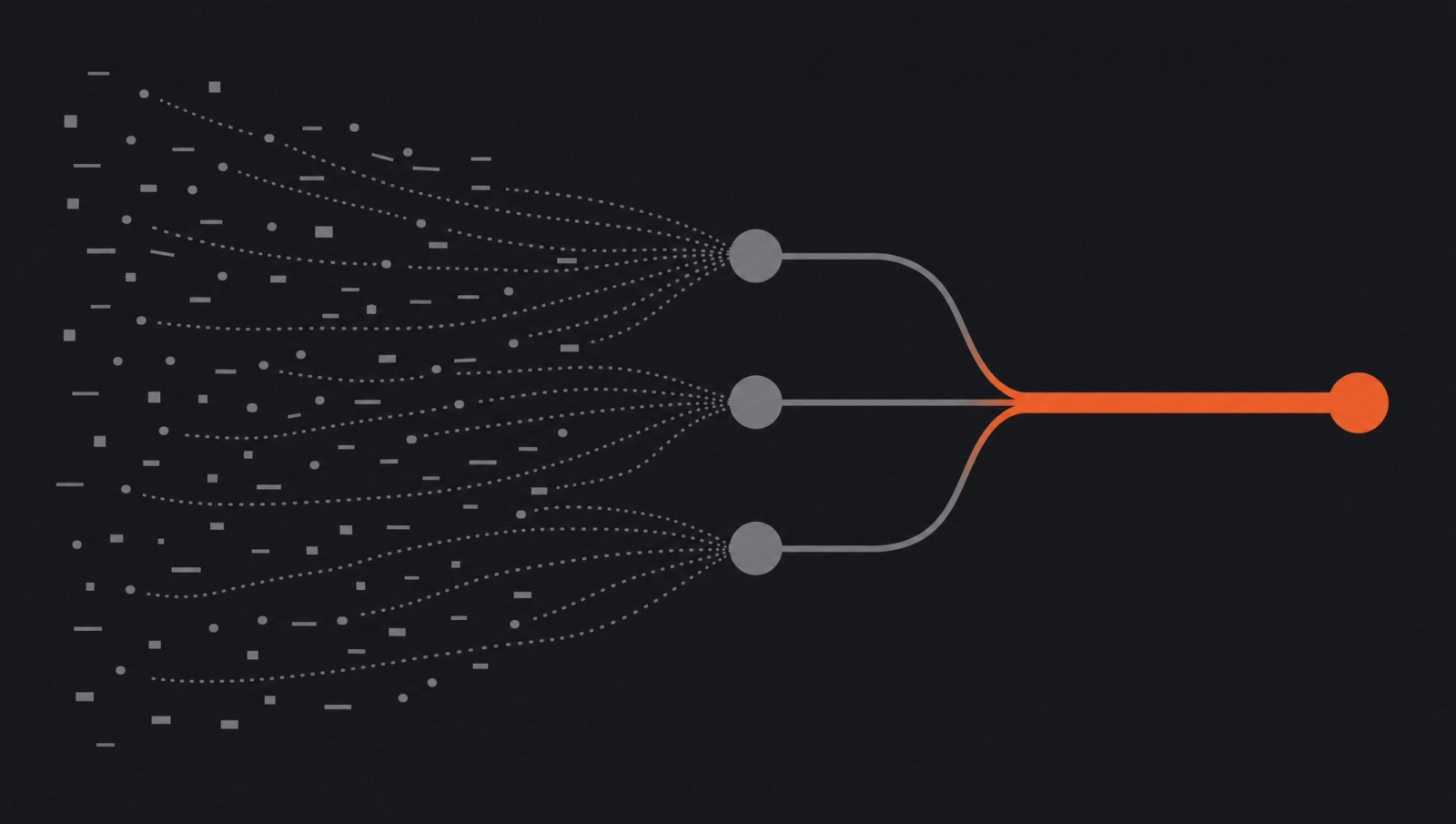
Intelligence density is the amount of useful judgement, context and execution a business can produce per person. A high-density business does not simply do more tasks. It makes each person better-supported, better-prepared and less dependent on memory.
This is the real leverage point for small businesses. Instead of asking how many more people are needed, ask how much more complexity the existing team could handle if context, follow-up and preparation were already in place.
What work should AI or automation handle first?
AI and automation should handle the repeatable work that burns attention but does not require final human judgement. Start with work that is frequent, time-sensitive, and context-dependent.
- Lead and client follow-up that should happen on time with the right context.
- Meeting actions that need ownership, timing and the reason attached.
- Client preparation where history should be gathered before a conversation.
- Internal routing where work needs to land with the right person and background.
The goal is not to replace the team. The goal is to remove the avoidable load around the team so they can carry more valuable work.
What should stay human as the business scales?
Relationship judgement, pricing calls, sensitive client conversations, exceptions and strategic decisions should stay human. The system should prepare, remember, route and suggest. People should decide where trust, nuance and accountability matter.
That division is what makes scaling feel safer. The business gets more capacity without pretending every decision can be automated.
Book a Sprint conversation Before hiring again, Catalyst Systems can help you map where your current team is losing capacity and what should become a system first. Book a Sprint conversation.
Your next step
Pick one point where growth is already creating strain: follow-up, handoffs, onboarding, reporting, quoting or meeting actions. Measure how much time is spent reconstructing context. That is usually the first capacity to win back.