Operating Intelligence
Real-Time AI Call Coaching: Help or Distraction?
Real-time AI call coaching can help a real estate agent in the moment, but it can also become a second conversation competing with the client. The difference is whether the system gives one grounded cue at the right time or floods the agent with advice they cannot deliver convincingly.
What problem is live coaching trying to solve?
The Notion client questions show a direct concern: if AI tells an agent what to say next during a live phone call, does it help the moment or distract from presence, tonality and delivery? Competitors are already positioning real-time prompts as the answer, so Catalyst needs a sharper point of view.
Tip
Please note: Call coaching depends on consent, disclosure and local policy. Do not treat recording, transcription or live prompting as a purely technical feature.
When does live prompting help?
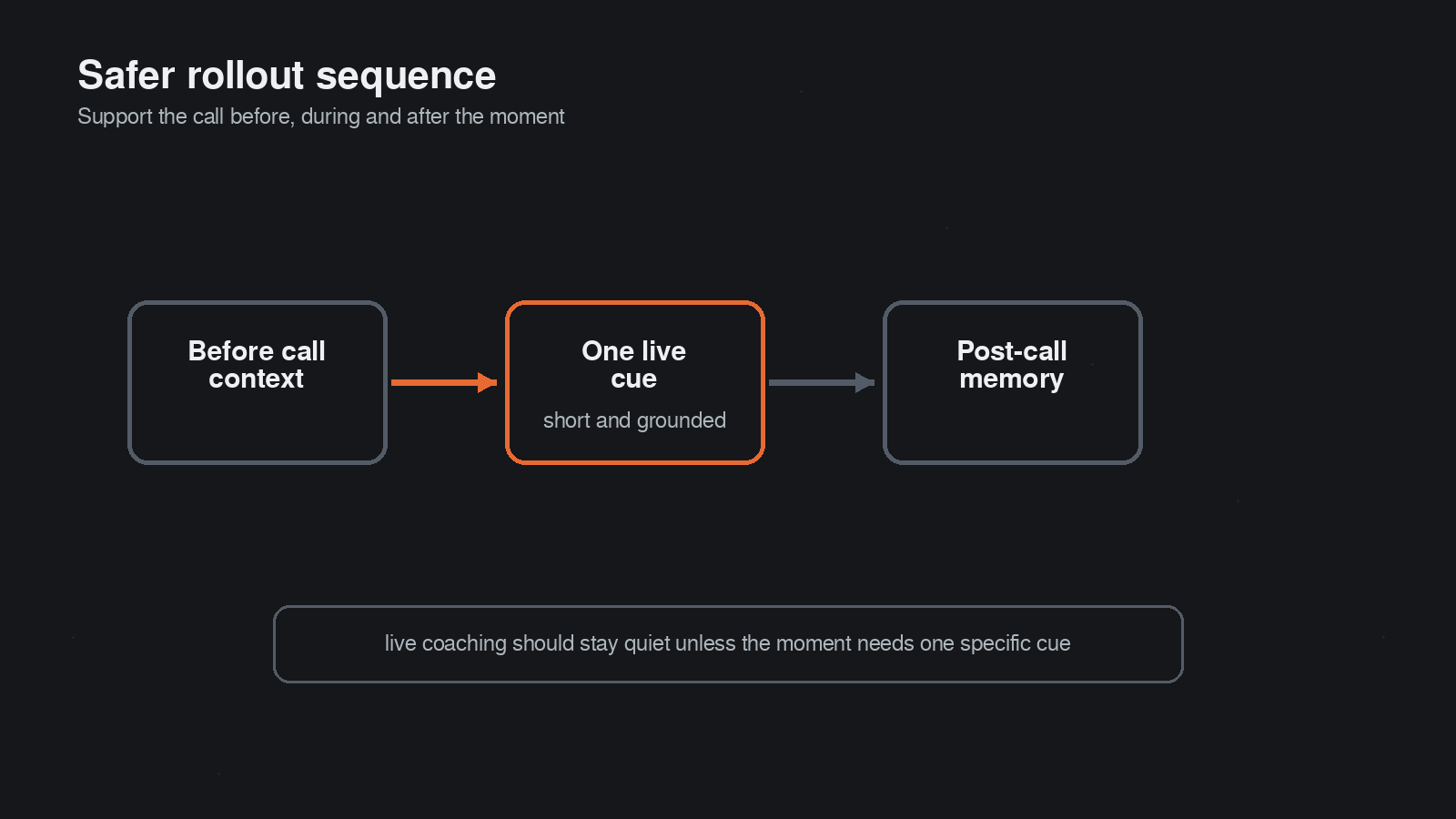
- The agent is trained to adapt the cue in their own voice.
- The cue is short, specific and tied to a known client context.
- The system stays quiet unless the moment genuinely benefits from intervention.
When does it become a distraction?
It becomes a distraction when the agent is reading instead of listening, when the prompt conflicts with their belief, or when the workflow ignores privacy and consent. Catalyst's existing privacy article is the safer foundation before live coaching is added.
A safer rollout sequence
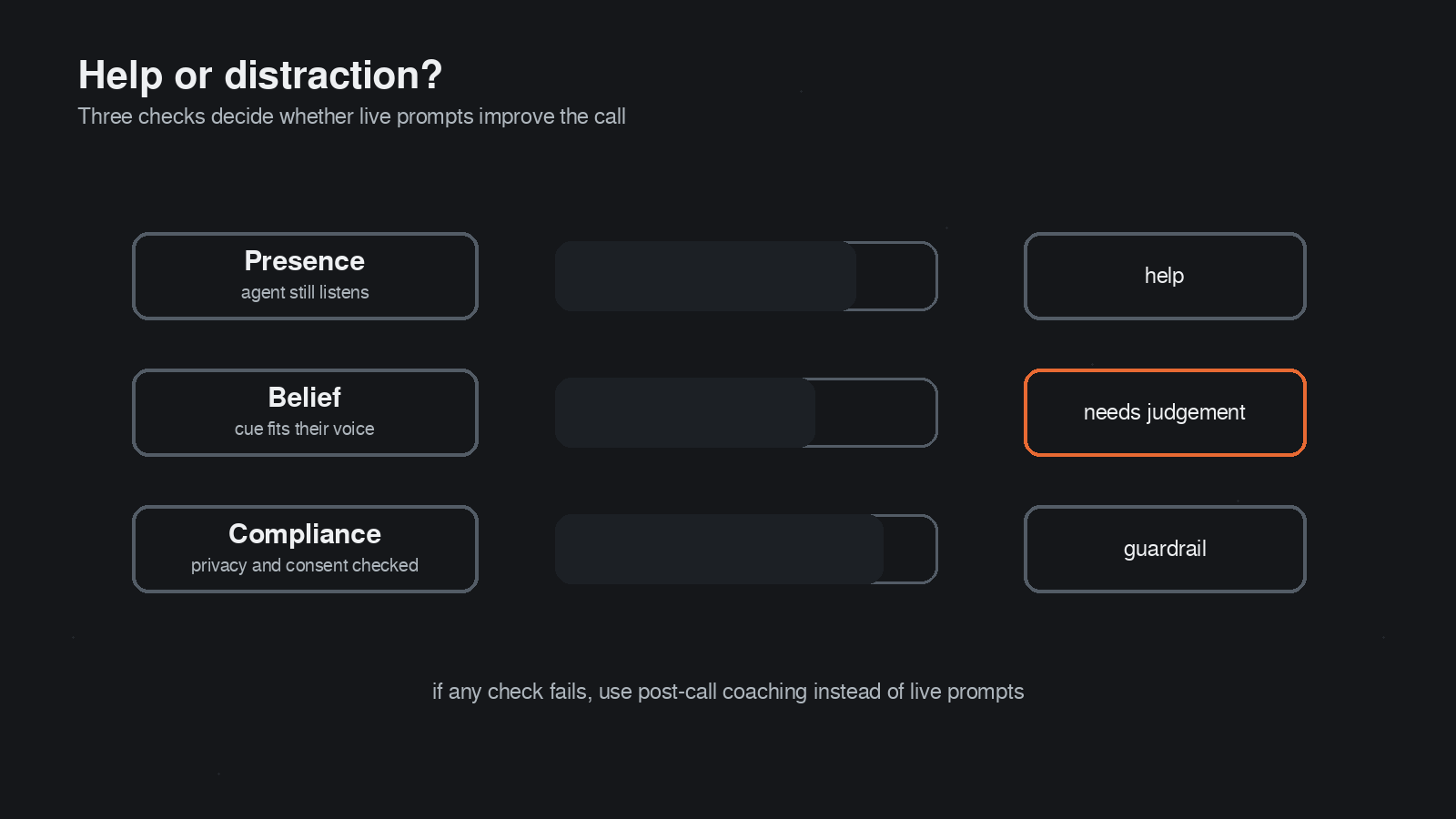
- Start with post-call memory: summary, objections, follow-up and coaching notes.
- Use those patterns to build approved playbooks and agent language.
- Add live cues only for narrow moments, such as a missed next step or a compliance reminder.
How is this different from generic call tools?
Generic call tools often optimise the call in isolation. Catalyst should position the call as one input into business memory: what was said, what changed, what should happen next and where that context should reappear.
Where to start
If your team is deciding between post-call intelligence and live prompts, start with the workflow that protects trust and proves adoption fastest. Book a Demo for Clearly
The best call intelligence does not make the agent sound like a bot. It helps the agent stay present, remember what matters and follow through after the moment has passed.
Frequently asked
- Is real-time AI call coaching always better than post-call coaching?
- No. Live cues can help in narrow moments, but many teams need post-call memory, playbooks and consent controls first.
- What is the main risk with live AI call prompts?
- The main risk is distraction: the agent starts managing the prompt instead of listening to the client.